In a power plant or mine, technical competency is not only about efficiency; it is directly about occupational safety and asset reliability. A wrong valve operation or a missed lock-out step can have very costly consequences. Measuring technical competency is therefore not an HR formality but part of operational risk management.
Why online tests?
Assessing hundreds of technical employees across sites to one standard is nearly impossible on paper: questions vary by site, scoring varies by assessor and results cannot be analysed. With an online competency testing system we can assess every site from the same question pool, under the same rules, on the same day, and compare results by position, site and competency.
What we measure
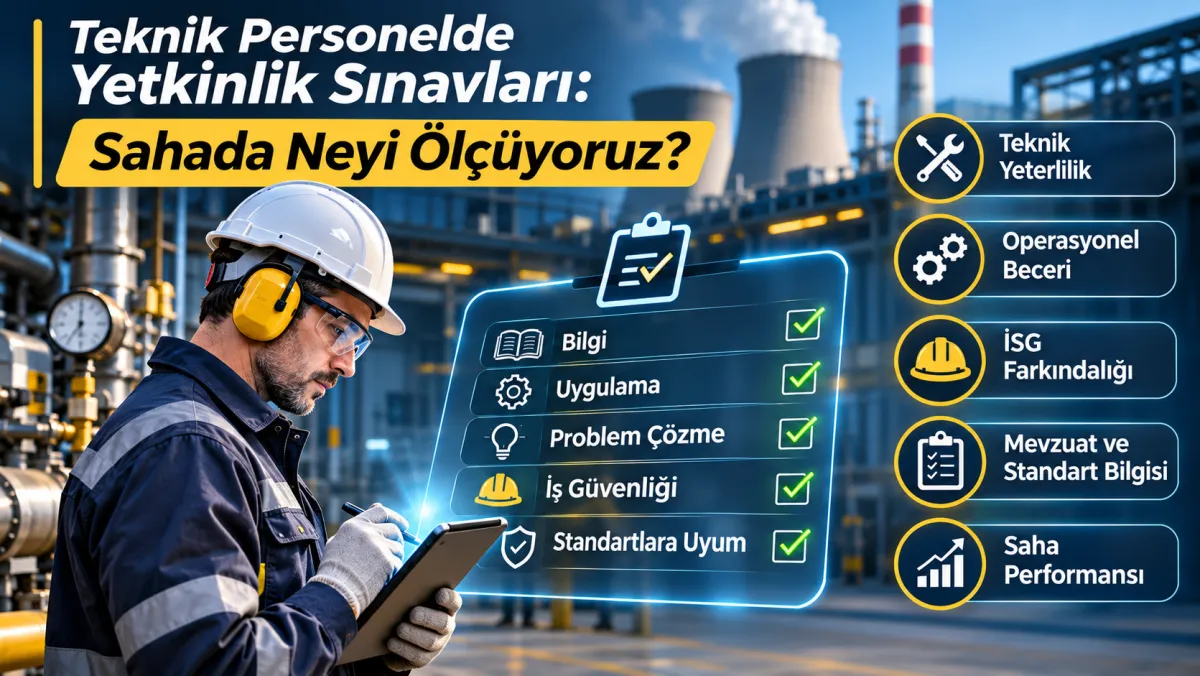
- Technical knowledge: how equipment works, failure symptoms, measurement and control values.
- Procedural command: the correct sequence of critical operations, especially lock-out/tag-out, permits to work and emergency steps.
- Situational judgement: scenario questions such as “what do you do first when this alarm appears?” measure reasoning, not memory.
- Safety awareness: recognising risks and the right order of response.
A good technical test measures not knowledge, but the ability to make the right decision on site with it.
Ensuring reliability
Results can only support decisions if the test is reliable. In our system each candidate receives questions from the pool in a different order, identity is verified at the start and time is limited. The pool is built with field experts and reviewed every cycle; questions that are too easy or do not discriminate are removed through statistical analysis.
What we do with the results
- Individual development: every employee receives a report of strengths and development areas, which shapes their learning plan.
- Organisational learning plans: if many sites score low on one topic, the problem lies in training content or the procedure, not in individuals.
- Authorisation and promotion: authorisation for critical tasks rests on measured competency.
Through the employee’s eyes
Communication is critical so tests are not seen as punishment. We positioned them as a tool where employees can see their own development and feel the organisation investing in them. Keeping results personal and confidential, giving constructive feedback and offering concrete development opportunities clearly increased participation and trust.