Many organisations hold several ISO certificates, yet run each as a separate world: a quality manual here, an environmental register there, an OHS file somewhere else. Audits become seasonal campaigns, and the system lives in binders rather than in daily work. An integrated management system (IMS) changes that by giving every standard one backbone.
Shared structure, shared language
Thanks to the common high-level structure, ISO 9001, 14001, 45001, 27001 and 50001 share context analysis, risks and opportunities, objectives, document control, internal audit and management review. Designing these once (and letting each standard add only what is specific to it) removes duplication and makes the system understandable to the people who use it.
Four steps from paper to data
- Inventory: list every document, record and form; retire what nobody uses.
- Ownership: give each process and each record a named owner and a review date.
- Digital flow: move approvals, nonconformities and corrective actions into a single platform with audit trails.
- Indicators: define a small set of measures that management actually reviews.
Document control across many sites
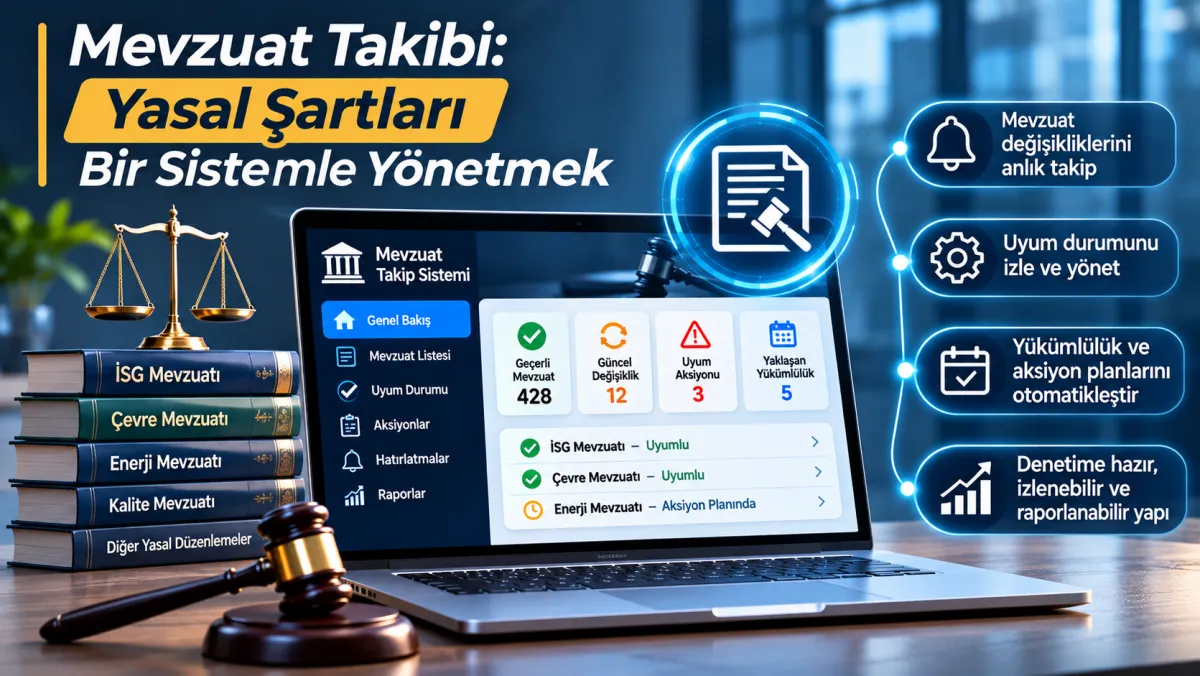
With power plants, mines and service companies in one group, the biggest risk is version chaos. A central library with site-specific annexes, controlled distribution and automatic review reminders keeps everyone on the current version without forcing identical procedures where operations genuinely differ.
Turning internal audit into a learning tool
Internal audit should not be a rehearsal for the certification body. When findings are analysed for recurring root causes across sites, audits become the organisation’s cheapest source of improvement ideas. Rotating auditors between companies spreads good practice faster than any memo.
Signs you are audit-ready
- Any record can be found in minutes, not days.
- Corrective actions are closed on time and their effectiveness is verified.
- Employees can explain how their work links to objectives.
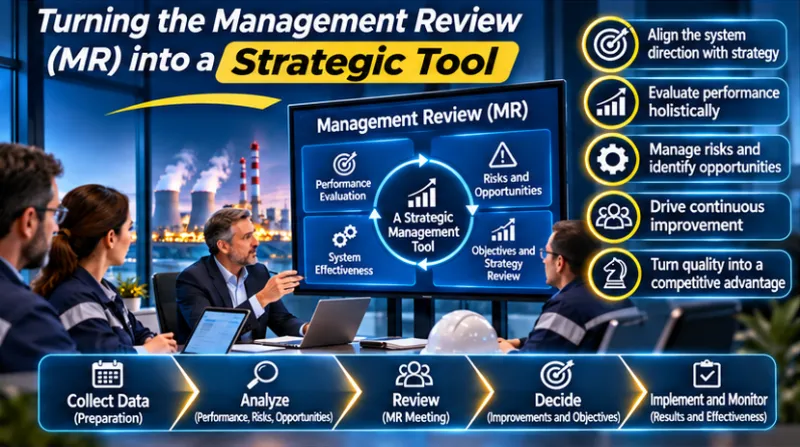
- Management review produces decisions, not just minutes.
Common mistakes
Copying templates without adapting them, appointing a “quality person” as the sole owner of the system, and digitising forms without redesigning the process. The IMS succeeds when line management owns it and the quality function enables it.