In a multi-sector holding company, recruitment does not become a standard process on its own. At a power plant, a construction site, a mine and the head office, the same position is assessed with different questions, scored on different scales, and the reasoning behind the decision is rarely recorded. The result is inconsistent decisions, longer cycles and a candidate experience nobody can measure.
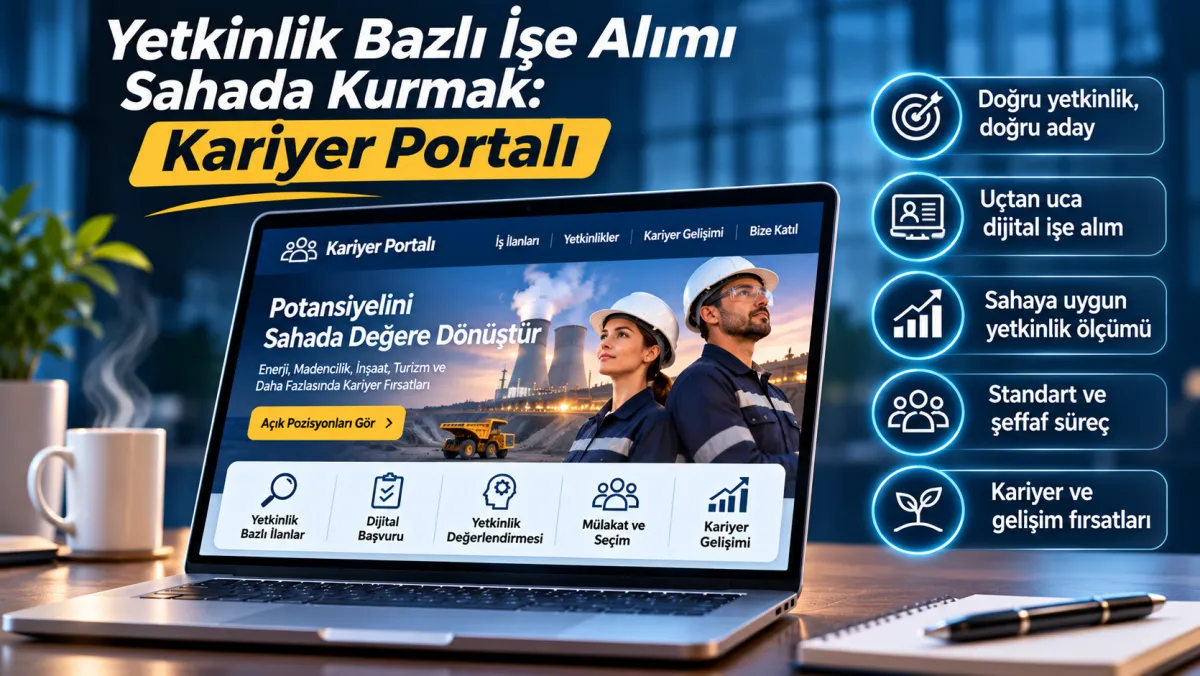
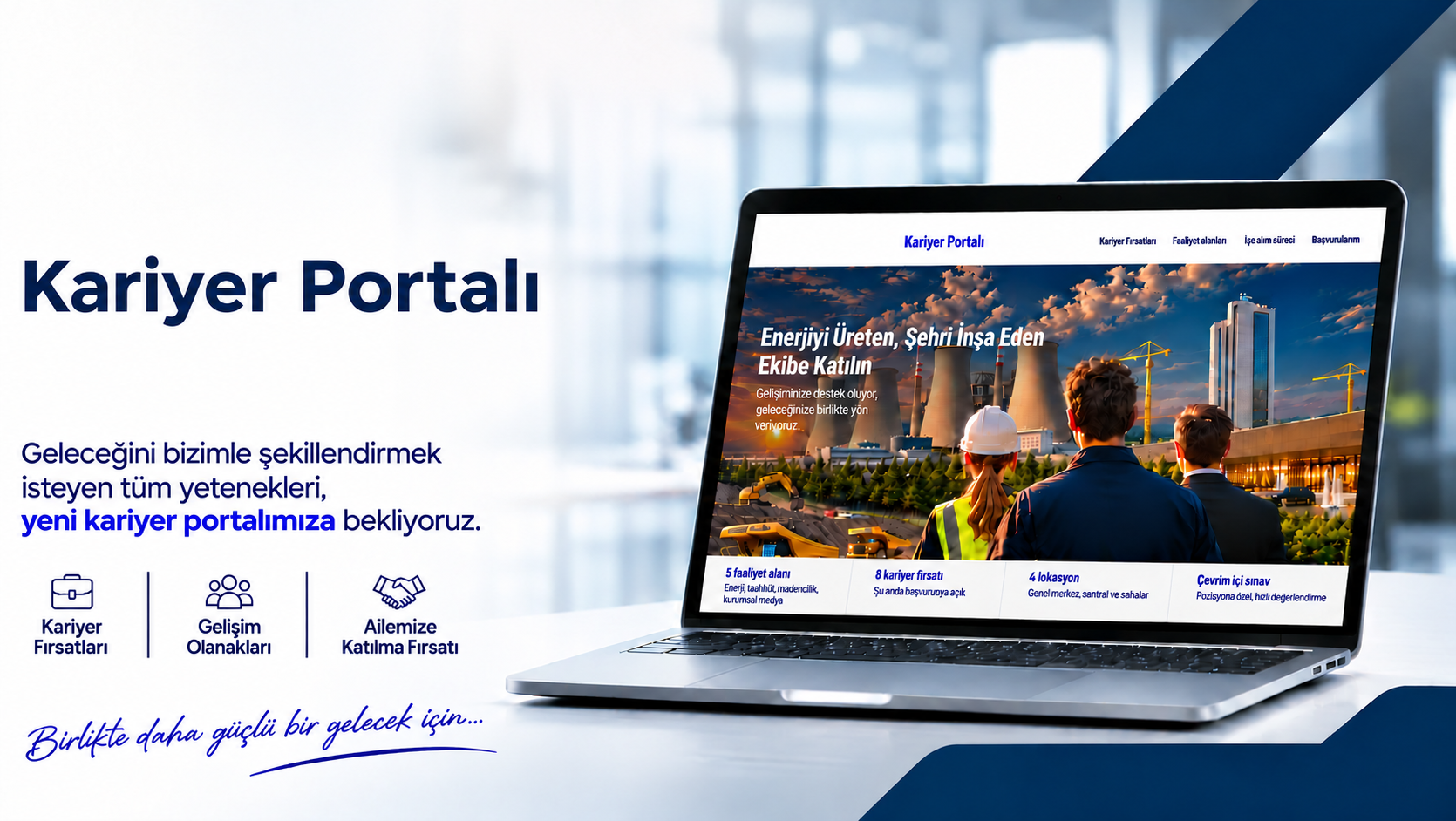
To change this, we launched the Career Portal together with our Human Resources team, under the ownership of the Corporate Development and Quality unit. In this article I share what we built and why, the challenges we met along the way, and how we overcame them.
Rules first, software second
Our first decision was to write the rules of recruitment before writing any software. Together with HR, we captured the full rule set for competency-based hiring in nine workbooks:
- Competency framework: Core, functional and managerial competencies, with behavioural indicators and L1–L5 career levels for each.
- Standard role catalogue and position mapping: Which role family and level each position belongs to.
- Requisition rule set: What information a staffing request must contain and who approves it.
- Assessment tools and evaluation forms: Which test, interview form and assessment-centre tool is used for which position.
The portal was designed as the digital counterpart of this rule set. The order mattered: automating a process whose rules are unclear only speeds up the disorder.
One flow from requisition to offer
Today every step of recruitment runs in a single flow:
- The line manager opens a staffing request.
- HR publishes the vacancy.
- The candidate applies and takes a position-specific test.
- Then come the recorded video pre-interview, evaluation, interview, offer and onboarding.
At every step, who decided and on what basis is on record.
The challenges we faced and how we overcame them
1. Every company had its own way of hiring
Each of our companies in different sectors ran recruitment its own way. Moving to a shared system meant redefining long-held authorities. We treated this as a question of roles and responsibilities: the line manager who opens the request selects the position-specific questions, and HR completes the test sections with the other question sets. Managers kept their sense of ownership, and HR kept the process standard.
2. Assessing office and field roles with the same fairness
We receive applications for roles ranging from plant manager to driver. The first version of the speed and ability test was text-heavy. When we saw that reading habits and language differences were affecting the results, we did not release that version. Instead, we built a question set based on shapes, such as tracking moving objects and remembering a shape that was shown.
The pilot showed that the correct answer to some questions was too obvious. We strengthened the distractors and improved how well the test differentiates between candidates.
3. Balancing remote-test integrity with candidate privacy
Running the test remotely raised the question of integrity. We secured it with full-screen mode, a single attempt and camera checks. But we did not trade candidate privacy for security: face and gaze-direction analysis runs only on the candidate's own device.
To keep technical problems from surfacing in the middle of a test, we also added a system check page where candidates can test their browser, screen, internet connection and camera in advance.
4. Interview load and calendar pressure
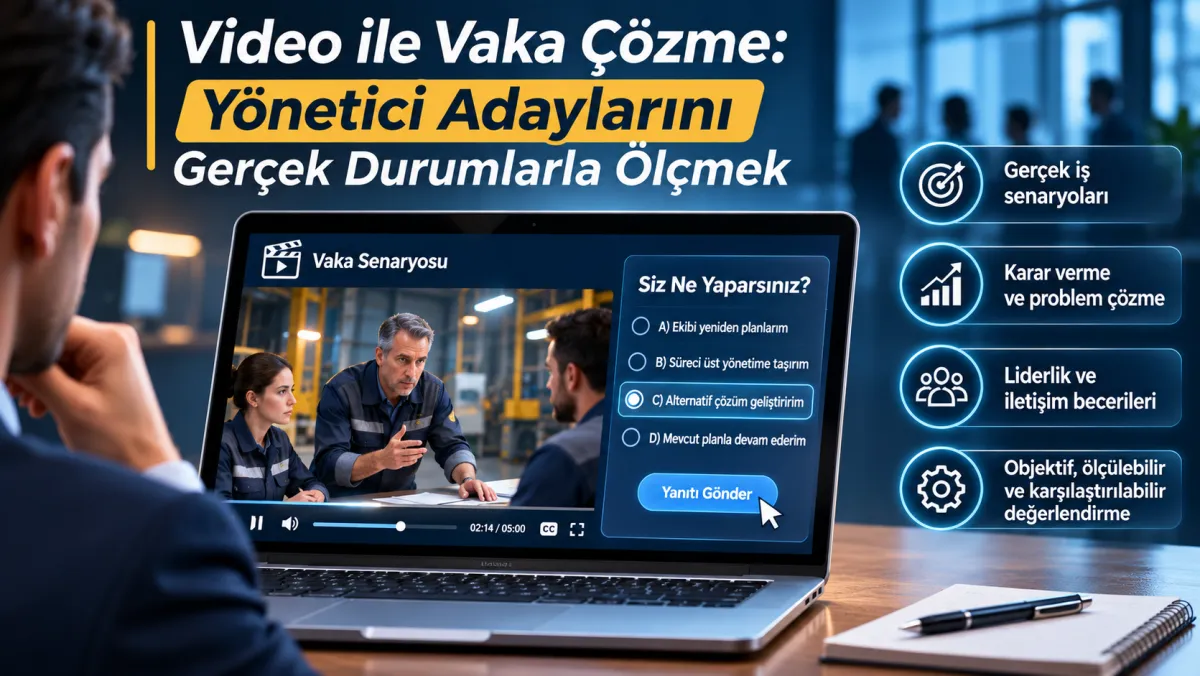
Holding a live first interview with every candidate was locking up the calendars of both HR and managers. We solved this with a recorded video pre-interview: the candidate records their solution to a written case. The assessor watches the recording at a convenient time and sees how the candidate expresses themselves, solves problems and approaches the issue. Recordings are kept on our own servers.
5. A transparent candidate experience without accounts
Asking candidates to create a user account was causing drop-offs, especially for field roles. Instead of accounts we used an application code: candidates see their application on the same device, and can look it up from any other device with their email address and application code. For candidates who cannot find a suitable vacancy, we added a general talent pool and a "notify me when a similar vacancy opens" option.
6. Notification noise and clear accountability
Sending every notification to everyone means that, after a while, nobody reads them. We wrote the notification rules together with HR: the HR Director sees every process, while team members see only the candidates they are responsible for. Who receives which notification can be tracked from the admin panel and changed from a single place when needed.
7. Security and data protection
Candidate data is personal data, and that responsibility was part of the design from day one. The HR panel and the database are reachable only from company networks. The privacy notice, cookie policy and terms of use are accessible from every page of the portal.
The final decision always rests with a person: the system gives the assessor structured evidence, and the decision and its rationale are recorded. From the outset we designed for the right, granted by Article 11 of Turkey's data protection law (KVKK), to object to outcomes produced solely by automated analysis.
Building it together with HR
The single most important choice behind this project's success was positioning the Human Resources team as a design partner rather than a user. We wrote the rules together, tested the screens together on real vacancies, and every piece of feedback from the field went into the next release. Even seemingly small consistency issues, such as writing candidate names the same way on every screen and in every email, were tied to a standard.
We launched the portal in the same spirit: our employees announced it by sharing trackable links from their own LinkedIn accounts.
Technology makes hiring faster; what makes it fair and consistent is rules written together.
Where we stand today
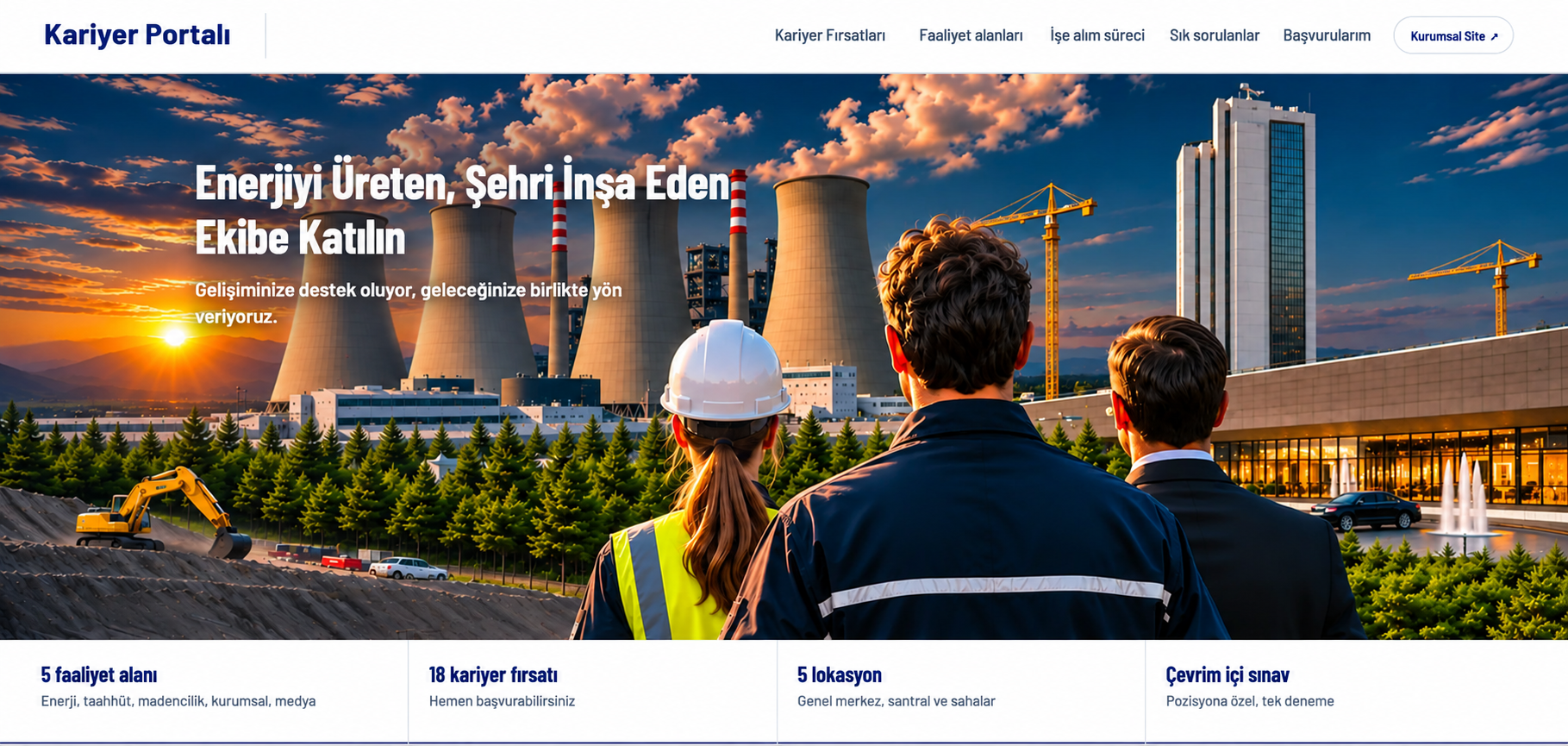
Today the portal manages vacancies across our energy, contracting, mining, media and corporate business lines from a single place. Roles at very different levels, from plant manager to specialist and driver, go through the same competency framework and the same decision discipline.
How we measure success
- Time from staffing request to offer
- Score consistency between assessors
- Share of new hires who successfully complete probation
- First-year attrition rate
- Candidate experience feedback
Three lessons for executives
- Rules come before software. Automation built before the competency framework and decision rules are clear only speeds up inconsistency.
- Fairness is a design task. An assessment tool should measure what you intend to measure, not reading habits or device differences.
- Ownership must be shared. When managers and HR have clear roles, the system stops being an obligation and becomes a shared working tool.
A well-designed career portal is more than an application form; it is where employer branding, competency management and data-driven people management come together.